

Early-Onset Cancers Are on the Rise. Knowing Your Family History Is Crucial.
 Download Speed Embed this player
 Listen in and play along as hosts Cara Anthony and Blake Farmer test their knowledge with a HealthQ quiz on detecting early-onset cancers.
Bryce Ramsey of Madison, Mississippi, was 33 when she was diagnosed with colorectal cancer. Upon noticing blood in her stool, she blamed the hemorrhoids she’d developed after delivering her son eight years earlier.
Ramsey didn’t initially link her symptoms to cancer.
“But I had just kind of made a deal with myself because the blood was starting to become more frequent,” she said. “I was like, ‘If this happens the next time I go to the bathroom, I’m going to make a call.’”
She saw more blood, and she reached out to a gastrointestinal clinic to get it checked out, just in case. Her doctor said she normally wouldn’t scope someone Ramsey’s age, “‘but something in my gut is just telling me I need to do so,’” Ramsey recalled. “And thank God she did because she found a 5-centimeter polyp.”
Ramsey had surgery, endured chemotherapy, and survived stage 3 colon cancer. Now 40, she volunteers for the Colorectal Cancer Alliance, a nonprofit advocacy group, to raise awareness of early-onset colorectal cancer.
Stories like hers are becoming increasingly common: In the U.S., more than a dozen kinds of cancer are on the rise in adults under 50. Among these early-onset cancers, colorectal and breast cancers have increased the most, and colorectal cancer is now the deadliest cancer for Americans ages 18 to 49.
Here’s what to know about detecting early-onset cancers.
1.Family history is one of the most important risk factors.
Researchers have not been able to find a single cause for the rise in early-onset cancers. Instead, research suggests a myriad of factors play a role, including obesity, heavy alcohol use, environmental factors such as microplastics, and disruptions to gut health.
Doctors generally follow population-level guidelines for routine screenings — such as recommending mammograms starting at age 40 to screen for breast cancer — but physicians might recommend some patients get screenings as early as in their 20s. Doctors weigh a patient’s personal risks, including their family history of cancer.
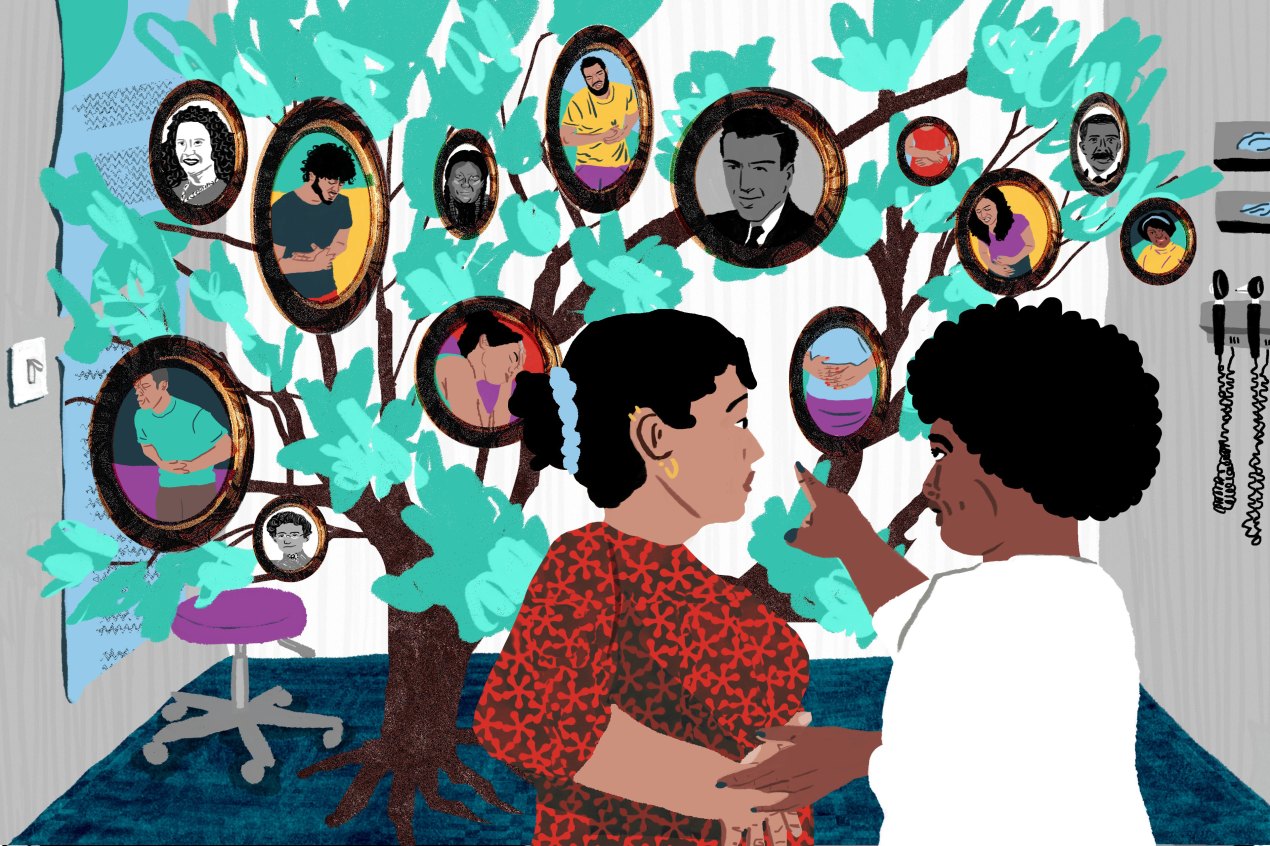
Ramsey learned only after her diagnosis that her grandfather previously had colorectal cancer. “If I would’ve known that I had a significant family history, I would’ve been scoped a lot younger,” she said. “My doctor said my tumor had probably been growing for seven to 10 years.”
After her diagnosis, she encouraged her father, aunt, and brother to get screened. All three were diagnosed with colon cancer, too, and survived after receiving treatment.
Ramsey said it can be uncomfortable to urge family members to get tested or to talk with them about private health information, but those conversations are worth having to save a life.
“Just ask the question or make a joke about it. And sometimes just little icebreakers will help,” she said.
2.Report unusual symptoms as quickly as possible.
Being vigilant about unusual body changes or symptoms — and reporting those to your physician — gives doctors the information they need to determine your personal risk for cancer.
“For example, a lump in the breast, abdominal pain, changes in bowel habits that really are not going away,” said oncologist Veda Giri, director of the Early Onset Cancer Program at Yale Cancer Center. “Certainly blood in the stools. Sometimes even symptoms such as unusual fatigue that doesn’t seem to go away.”
“It’s incredibly important to bring symptoms to your doctor,” Giri said.
3. Talk, then test, then talk again.
Ads for at-home cancer tests are everywhere, so you might be tempted to use a screening kit instead of going in for an office visit or a standard screening, like a colonoscopy.
But not all tests are created equal, Giri said. It can be hard for laypeople to understand the accuracy of at-home screening kits, so they should talk to their doctor first.
“Some of these tests could lead to a false sense of either reassurance or false anxiety and alarm,” she said.
For people who decide to move forward with an at-home test, experts say they still need to consult with a physician. If you get any sort of abnormal result, your doctor is going to want to follow up with additional testing, such as a colonoscopy. Sharing your results, regardless of outcome, will help inform your care.
People and Policy
The U.S. Preventive Services Task Force recently changed the recommended age for women to begin mammogram screenings for breast cancer from 50 to 40. But there’s a difference of opinion among national advocacy and medical groups about whether regular screenings should happen every year or every other year.
In 2021, the same task force lowered the recommended age to 45 for a first colonoscopy for colon cancer detection for people with average risk. Establishing a relationship with a trusted medical practitioner can help patients assess personal risk and sort through new information as research and public health guidance evolve.
If you feel uncertain about your personal risk for cancer or when you should start cancer screenings, one of the best ways to advocate for your health is to establish a relationship with a medical practitioner you trust and ask specifically about your cancer risk. You can also ask to consult with a genetic cancer risk specialist, a type of medical provider who helps patients evaluate their cancer risk, often with genetic testing.
This installment is part of HealthQ’s reporting on caregiving among the sandwich generation. For more, check out the series archive.
Katherine Ruppelt and Emily Siner at Nashville Public Radio contributed to this report.
HealthQ is a health series from reporters Cara Anthony and Blake Farmer, approachable guides to an unapproachable healthcare system. It’s a collaboration between Nashville Public Radio and KFF Health News.
KFF Health News is a national newsroom that produces in-depth journalism about health issues and is one of the core operating programs at KFF—an independent source of health policy research, polling, and journalism. Learn more about KFF.This <a target="_blank" href="https://kffhealthnews.org/news/healthq-early-onset-cancers-family-history/">article</a> first appeared on <a target="_blank" href="https://kffhealthnews.org">KFF Health News</a> and is republished here under a <a target="_blank" href="https://creativecommons.org/licenses/by-nc-nd/4.0/">Creative Commons Attribution-NonCommercial-NoDerivatives 4.0 International License</a>.<img src="https://kffhealthnews.org/wp-content/uploads/sites/8/2023/04/kffhealthnews-icon.png?w=150" style="width:1em;height:1em;margin-left:10px;">
<img id="republication-tracker-tool-source" src="https://kffhealthnews.org/?republication-pixel=true&post=2249637&ga4=G-J74WWTKFM0" style="width:1px;height:1px;">-
Shanghai clarifies IPO path for cash-hungry AI labs racing against USSennheiser just gave me a compelling reason to put away my Bose and Sony headphones for goodEurope’s budget battle begins as leaders spar over China challengeSwedes more likely to skip work during football World Cup and EurosUS and Iran presidents sign ceasefire agreement, but Trump says he could still resume attacksEU leaders to pick from menu of anti-China trade measures over summit dinnerChatGPT now has a hub for scheduled tasksMost beaches in Europe offer 'excellent' water quality, study saysForza Horizon 6 explodes on Steam even before it's officially outParnell Square trial: Doctor on scene describes knife injuries inflicted on child
Next:Digital Tools Are Transforming Efforts to Save Plants from Extinction
- ·Magic: The Gathering Teenage Mutant Ninja Turtle’s Draft Night Kit Is Discounted Ahead of Prime Day
- ·Sooner than expected? Useful quantum error correction promised for 2028.
- ·Kevin Warsh, poised to usher in ‘regime change’ at the Federal Reserve
- ·How to turn off AI in your Google Docs
- ·Call for tech defences to protect sovereignty
- ·Tesco moving 40,000 server workloads off VMware amid Broadcom's “abusive conduct”
- ·Exclusive: Zelensky, Trump, Macron hold behind-the-scenes meeting at G7 summit as Ukraine pushes peace talks
- ·Massive breach spills credentials for thousands of sensitive networks
- ·Trump signs MoU as Iran says uranium will remain in country, IDF Lebanon attacks 'breach' agreement
- ·Epic Games details how it's embracing generative AI in Unreal Engine
- ·Troubling questions dog INEC data leak
- ·Databricks says it solved the decades-old data pipeline problem that's been slowing AI agents
- ·27 things to know before starting a job search
- ·Re: FCCPC and the Presidency’s FDI drive
- ·EU lawmakers give final approval for deportation centres outside bloc
- ·Databricks says it solved the decades-old data pipeline problem that's been slowing AI agents
- ·EU plans to strengthen passenger rights, compensation rules: What travelers need to know
- ·The Download: the first brain implant power user and South Korea’s AI obsession
- ·EU lawmakers give final approval for deportation centres outside bloc
- ·Wellbeing report paints complex picture of economic progress and growing inequality
- ·Davies available for Canada against Qatar after injury absence
- ·Trump calls Brazil 'politically difficult'; Lula says he should learn about 'civilized elections'
- ·Spain's ex-PM Zapatero testifies as a suspect in the Plus Ultra bailout case
- ·Anthropic got hit by export rules nobody understands
- ·Inside the government’s push to divert Puerto Rico solar funds to a bankrupt utility
- ·INTERVIEW: Montenegro should not have to wait too long for full membership
- ·In agentic commerce, the agent won’t ask—it will judge
- ·Spain's ex-PM Zapatero testifies as a suspect in the Plus Ultra bailout case
- ·The European Council’s new political arithmetic
- ·Just a few thousand small-town voters are about to decide Britain’s future
- ·Alabama’s Self-Proclaimed ‘AI Watchman’ Unseats Incumbent Public Service Commissioner
- ·Work Visa in Panama: The Employer-Sponsored Route
- ·The Download: a reality check for geoengineering and the science of interoception
- ·Trump clears a low bar at the G7 after months of tumult
- ·Trump says talks with Anthropic are 'going fine' as its powerful AI models remain offline
- ·EU lawmakers give final approval for deportation centres outside bloc